The Consumer Affairs Ministry is developing machine-readable SMART standards using AI to reduce industry compliance burden. This initiative aims to modernise India's standards ecosystem, with the Bureau of Indian Standards transitioning from a regulator to a facilitator, promoting private sector testing and faster processes.

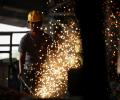
The start of the West Asia conflict has led to a sharp increase in crude-linked raw material prices, pushing up the price of helmets across the country.

Landfill sites are filling up faster than ever, raising concerns about where all our waste will go in the future. India alone produces more than 150,000 to 170,000 tonnes of household waste every day, with each person generating roughly 0.3 to 0.6 kilograms of rubbish daily, depending on the area and lifestyle, as per PIB.

Oil-marketing companies (OMCs) are set to significantly expand the sale of flex fuel (E85) across India, with plans to reach 5,000 outlets in major cities by the end of next year, according to Petroleum Minister Hardeep Singh Puri. This move aims to boost ethanol demand, reduce crude oil imports, and cut carbon emissions, coinciding with the launch of India's first flex-fuel vehicles by Maruti Suzuki and Hero MotoCorp.
Commerce and Industry Minister Piyush Goyal announced that a US team is expected to visit India next month for trade talks, following an earlier Indian delegation's visit to Washington, DC, in April to finalise an interim pact and advance negotiations for a broader bilateral trade agreement.

'Customers do not recover the original making charges paid on old jewellery. Sentimental value is lost when heirlooms are exchanged.'
A new report suggests that blending 20 per cent dimethyl ether (DME) with LPG could significantly reduce India's LPG imports, leading to substantial savings in foreign exchange.
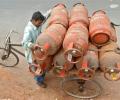
Researchers at CSIR-NCL have developed a technology for producing dimethyl ether (DME) as an alternative to liquefied petroleum gas (LPG), potentially reducing India's reliance on imports and enhancing energy security.

A deep split has emerged within India's auto industry over the proposed CAFE exemption for small cars, with only Maruti Suzuki and Renault backing the move in the final SIAM vote.

India may adopt a "calibrated" and a "step-by-step" approach to easing norms on investments originating from China, Union Commerce and Industry Minister Piyush Goyal said on Tuesday. He was in a conversation with A K Bhattacharya on Day 1 of Business Standard's two-day annual event, Manthan 2026. The minister said foreign direct investment (FDI) from China was certainly not "banned", but it goes through an approval process. "The government's approach at the moment is to accelerate the approval process."

'We kept this Budget on a larger plank, rather than on one incident, however serious.'

With TDP and YSRCP trying to score political points, the sacred laddu may well create a storm in days to come.

In 2025-26, the government allocated Rs 6,81,210 crore for defence budget.

Siam argues that a 2040 ban could destabilise ongoing and future investments and threaten millions of jobs in the automotive value chain.
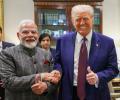
The agreement addresses non-tariff barriers and promotes increased trade in technology products and cooperation between the two countries.
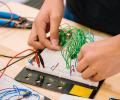
The US wants India to recognise internationally accredited labs, harmonise labelling requirements and the validity period of test reports and certification with global practices, and eliminate retesting requirements.

Indian private sector and State-run refiners continued to receive crude oil from Russian suppliers even after November 21 -- the winding-down date for US sanctions on supplies from leading Russian oil producers imposed in October -- as new intermediaries sprung up in West Asia to sell the oil, according to senior refining sources and ship tracking data.

The matter has now been escalated and the ministry has written to Customs, Bureau of Indian Standards (BIS) and the Directorate of Revenue Intelligence (DRI) to investigate it thoroughly.

'If the targets become unscientific and unjust, Then, just to meet CAFE-III regulation, a small car -- which produces a very low absolute carbon dioxide -- will have to be discontinued.'

Various industry bodies have sought immediate government intervention through the imposition of anti-dumping duties, claiming India has seen a surge in imports of Chinese goods over the past two weeks.

EV manufacturers point out that converting a regular petrol car into a flex-fuel vehicle requires only about Rs 17,000-25,000 per unit, whereas developing an EV demands vastly greater investments in research, battery development, and localisation.

In absolute terms, both types of cars must cut emissions by about 28-29 g/km. But in percentage terms, the lighter 900-kg car must reduce emissions by 27 per cent, while the 1,500-kg car needs a 22 per cent cut. And the target becomes progressively stringent for both -- but, once again, the tightening is sharper for the 900-kg car than for the 1500-kg car.
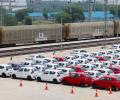
Companies with "gas guzzlers" are trying to set up the wrong narrative against small cars getting relaxation in the proposed corporate average fuel efficiency (CAFE-III) norms on the basis of weight, Maruti Suzuki senior executive officer corporate affairs Rahul Bharti said on Monday, bringing to the fore deep division among carmakers regarding the upcoming rules.
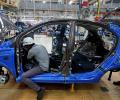
The move offers flexibility in compliance but also places penalties squarely on the designated manager of such a pool.
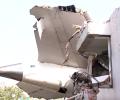
The only case where there could be a change in insurance payout is if Air India's management were found to be aware of the accident and the accident was deliberate.

Maruti Suzuki, India's largest producer of small cars, stands to benefit the most.
The growing rift between MSIL and rival automakers has complicated the government's efforts to finalise the CAFE norms.

From toys, footwear and furniture to insulated flasks, smart meters, and air coolers - the Central government over the last decade has mandated higher standards for production and imports of such items. Sample this: Till 2014, there were 14 Quality Control Orders (QCOs) covering 106 products. By the latest count, there are 156 QCOs on 672 products.
Since India relies heavily on specialised imported fasteners for critical applications in industries, such as automobiles, aerospace, electronics, and defence, their sudden unavailability will jeopardise production.
'Probably revised guidelines will come, and then the real picture will emerge.'

'Indian private universities can provide world-class education at one fourth the cost, home comforts, and direct links to Indian and global industries.'
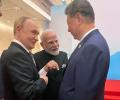
'One Chinese interlocutor said India should realise that "China can do without India, but India could not do without China", pointing to its inability to do without Chinese intermediates and components,' former foreign secretary Shyam Saran discovers on a visit to China.
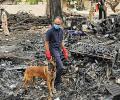
'The crash site must be secured because something small -- like a pipe or hydraulic line -- could hold a critical clue.'
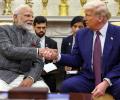
'India's farmers will be unable to compete with the US, given the subsidies that the latter provides its farmers.'

The USTR report, released just ahead of the US' April 2 deadline for implementing reciprocal tariffs, has also cited high tariffs and price caps, which have not increased in line with inflation, as key obstacles for US businesses.

Revenues from Bangladeshi patients have declined by 30% to 35% in 2024-2025. Bangladesh typically accounts for 70% to 75% of all medical visas issued by India.

Turkiye and Azerbaijan backed Pakistan and condemned India's recent strikes on terror camps in that country and Pakistan-occupied Kashmir under Operation Sindoor.
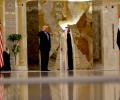
'In the Indian government there are no illusions about the United States reliability or the possibility of having any kind of preferential treatment from Washington when it comes to trade.'
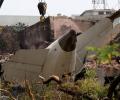
'A few answers for the reason of the crash will be known -- whether it was a technical fault, design issue, human error etc.'
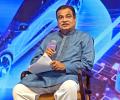
'I am not an aspiration-oriented politician.' 'This is the time to redefine politics.' 'Politics of power is not real politics.'
